Public Safety IoT: edge AI in 20 São Paulo police cars
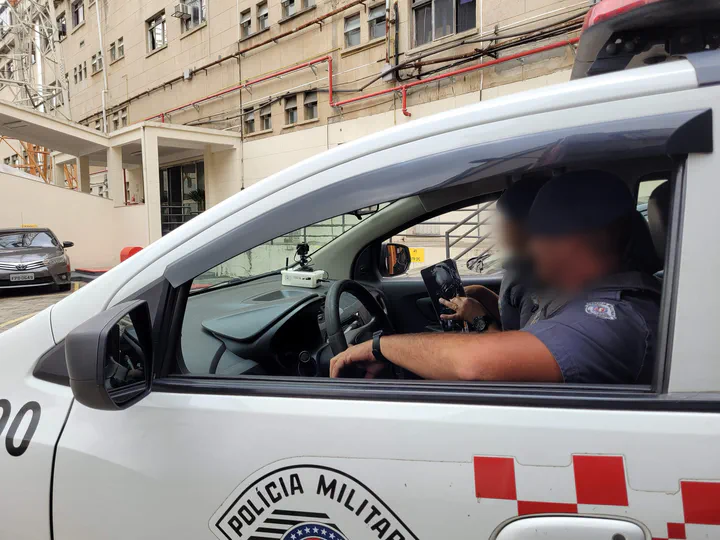 A Sentinel device installed in a São Paulo Military Police vehicle.
What it is
The Public Safety IoT pilot (Vigilância Urbana) was a smart-cities deployment that put edge-AI “Sentinel” devices in 20 São Paulo Military Police vehicles. Each Sentinel — a Brazilian-designed SBC Labrador (open-hardware single-board computer from the Caninos Loucos Program) paired with cameras, sensors, and LoRaWAN connectivity — processed video on the edge for license-plate recognition and weapon detection, and forwarded geolocated alerts in real time to the Police Operations Center.
The pilot was part of Cidades IoT, a multi-year initiative led by LSI-TEC in São Paulo and funded by BNDES, the Brazilian development bank.
What I built
As senior engineer at LSI-TEC (2020 → February 2023), I led the architecture and engineering execution of the Public Safety pilot:
- End-to-end system architecture — Sentinel device, LoRaWAN uplink, ingestion API, alert pipeline, Police Operations Center integration. Deciding what runs at the edge vs. the cloud, how alerts propagate, and how to keep the fleet operable in the field.
- Edge stack on the SBC Labrador — embedded C plus Python computer-vision pipelines for plate and weapon detection
- Backend and data pipeline — APIs to ingest telemetry from the fleet, store events, and serve them to the police-side dashboard
- Day-to-day technical leadership — defining how each component would be implemented and unblocking the engineering team
Why it was hard
- Edge constraints — the Labrador is a small open-hardware Brazilian SBC, not a beefy server. Inference + connectivity + local storage had to fit alongside reliable operation in a moving vehicle
- Real-world automotive environment — dust, vibration, intermittent LoRaWAN coverage, summer heat, no IT staff in the field. The system had to keep working without anyone touching it
- Privacy and chain-of-custody — security-relevant detections need accurate timestamps, geolocation, and tamper-resistant event logs
- Multi-stakeholder pilot — BNDES, Military Police, CET, American Tower, Stellantis, Deloitte all had different requirements and acceptance criteria
- Research-to-production gap — components came from research labs but the pilot had to behave like a production system in police hands
Numbers
- 20 police vehicles equipped in São Paulo
- Cidades IoT consortium: LSI-TEC (lead), BNDES (funder), São Paulo Military Police, CET (traffic authority), American Tower, Stellantis, Deloitte
- 2 AI capabilities at the edge: license-plate recognition, weapon detection
- Active engineering through early 2023
Press
Links
- Cidades IoT — Public Safety — official project page
- BNDES contract document (PDF) — scope and partners
- Project research published at IEEE — broader Cidades IoT research output